
Western Playland, a Texas West Coast IPA Collab, Two Ways — Classic and Modern
Rollertown Beerworks opened its new downtown campus in late 2025 in Frisco, a major suburb in the Dallas–Fort Worth Metroplex. Backed by Dallas Mavericks legend Dirk Nowitzki (Rollertown’s favorite Kolsch, Big German, is named after him) and designed with the city of Frisco as a community entertainment destination, it has already hosted Lucha on the Lawn, a sumo tournament, FC Dallas tailgates, and a whole slew of concerts. Chad Moshier, Director of Brewing Operations, Tommy Miller, Head Brewer, and the team keep more than twenty taps going. They release something new just about every two weeks. Bringing together five Texas breweries from across North and Central Texas, a limited-time collaboration brew was a recent addition to that line-up.
What began as two old friends catching up over a beer, turned into ten friends catching up over about 15 barrels’ worth. They brewed up a West Coast IPA called Western Playland, split the batch and hopped it two ways — ultimately, giving tap room guests the unique interactive opportunity of trying each side by side, to see how an identical base hopped differently changes a beer’s whole profile. It was a total hit.
Collab Day
Tim Sciascia, co-founder of Cellarmaker Brewing, now works with Berkeley Yeast. He and Rollertown's Chad Moshier go way back — they met decades ago in Boston before each became professional brewers. Tim was giving tours at Sam Adams and Chad, a show producer at The Brewing Network, came through with BN host Mike "Tasty" McDole, who had just won the nationwide Sam Adams Long Shot competition. The winner got to brew their beer at scale. Tim and Chad have been friends ever since.
When Chad put the word out that he and Tim were getting together, a group of Texas brewers joined in to make it an occasion. Tim flew in. Ryan Hancock of Southern Roots drove in from Waco. Spencer Withrow of White Rock came in from East Dallas. CR arrived from Bankhead—the same awarded Rowlett brewpub that Chad had helped build before he came over to Rollertown, now in CR’s hands.
Jacob Bates, Dylan Moore and Zack Rosen from Bird Creek Brewing came in, too. They probably had the longest drive that day—from Temple, an hour northeast of Austin. And they carried with them the excitement of their newly minted Texas Craft Brewery of the Year title and a whole mess of Texas Brewers’ Cup medals—a feat for a brewery that’s only 3-years old. They didn’t know it then, but they were about to get another medal, too — at the World Beer Cup for Bare Bones Disco.
On a collab day, getting down to business means something different than it does on an average day. Production has a certain grind. Whether it’s replicating the same beer you brewed the week before or making sure to hit distribution schedules, it’s more rigid. Collab day is creative. "We came up with a rough recipe before we got together," Tommy said, "and then throughout the brew we changed it on the fly. It was great. Kind of almost back to the homebrew days — getting together, bringing some beers. Just figuring out how to brew something really cool."
What Texas loves first and foremost just may be easy-drinking, clean lagers. The West Coast IPA could be considered a hop-centric extension of that idea. Certainly for craft beer brewers, “IPA still wears the crown,” Chad said. “West Coast IPAs are dry, snappy, and insanely crushable. That crisp hop bite at the end is just addictive.” Part of why they chose the style for the collab brew was because it’s satisfying in that way: "I think long term beer drinkers eventually lean towards dry and bitter, and West Coast IPAs scratch that itch.” But maybe also because, Tommy said, "We brew so many hazies — it gets to where you want to do something else.” In addition, "West Coast IPA is just a great showcase for hops,” Dylan added, “It allows you to really understand how hops impact flavor and drinkability.” There was an extra dimension to that with Western Playland, which is really two beers. The difference hinges on the hop bill.
Happy Accident
The batch was planned as a seven-barrel brew, but when it came down to it on brew day, the seven-barrel system that had recently moved over from Rollertown’s Celina location, wasn’t working. The electrical for the auger had not yet been connected. And their fifteen-barrel tanks were still being installed. So, they pivoted. They brewed a half batch on the 30-barrel system and split it into two seven-barrel fermenters. That’s when the two-direction dry hop idea came up. "That’s just collab day. Nothing goes according to plan," Tommy said. “We ended up with a lot more beer than we thought we were going to get, so we had the opportunity to get two different beers out of it." The wort was split equally and hopped two different ways.
For the grist, they left out the caramel or color-adding malts, and added rice to lighten the body—to crisp it up, go for a lower ABV, and to keep it pale. It was a deliberate lean toward low SRM that Tommy and Bird Creek's Zack Rosen both identified as on-trend for Texas.
Hops: for the Classic version it was Columbus Cryo, Chinook, Simcoe, and Mosaic. This was "Your old school high-IBU West Coast American IPA style," Tommy said. "We were bringing that back in a way, but with big Whirlpool additions that give it really cool contrast."
The goal for the classically styled version was clean bitterness. "A lot of West Coast IPAs have gone way lower on their 60-minute additions — going heavier on whirlpool," Tommy said. "But we wanted this to have really clean bitterness, like your more traditional West Coast IPAs. A lot of craft beer scenes around the U.S. have gone away from that."
The modern version gave Strata the lead with strawberry, passionfruit, cannabis-adjacent brightness, then Krush Cryo for citrus and fruit-cocktail softness. Mosaic tied it together. "The modern one has your more trendy hops, hops that a lot of people are using now in hype IPA beers," Tommy said. "You can really taste the difference. They taste clearly like two totally separate beers, which is really cool." Both versions were fermented with Berkeley Yeast's FRESH™ Chico, Rollertown's house strain.
“Chico is my favorite yeast already,” Tommy said. “I love the clean flavor; it ferments super hard. And with the yeast making ALDC, I don't have to worry about off flavors. I just let it roll. It takes stress off my shoulders, not having to worry if it's going to be a nice clean beer." For a West Coast IPA where the hops’ flavor clarity is everything, that's important.
It pours in two versions at Rollertown's tap wall, where customers can taste them side by side. "Our customers really enjoy seeing how the beers came out so much different with just those additions," Tommy said. "It's a big talking point."
At the End of the Day
At the end of the collab-day beers were cracked and conversation ranged. Someone had sourced a couple of cases of Underberg — one case at room-temperature, the other chilled. When it’s chilled it’s known as an “Iceberg,” CR said.
Underberg is an industry-insider tradition, but there are different camps on how to serve it — even if no one really cares that much in the end. In this crew, CR, Tommy, and Spencer were pro-Iceberg (refreshing, smooth). Tim and Dylan thought that Underberg served cold was a cop out. "Too easy," Dylan said. Similarly, Tim wants a kick from the bitterness, "if it's cold, all that is muted,” he said.
But they all agreed in the end that — Chad put it best — "There's never a wrong way to drink a 'Berg when you're sharing the moment.” That’s with one notable exception, Ryan added, "Hot Underberg is the devil.” And Tommy agreed, “A warm one out of a van in the Texas heat all day doesn't go down the best.” That sounds like the voice of experience.
Whether it’s stories, experience, beers or ‘bergs “Collabs are 98% hanging out and sharing,” Tim said. “and that last 2% is really important. Someone always seems to mention a process, a tweak, a yeast they've been playing with, and suddenly you're rethinking something you've been doing for years, that there’s no way it would have come up otherwise." That’s part of what makes meeting like this so important to brewers, even beyond the beer itself.
"Hearing Dylan and Tim discuss how they schedule their hops got me looking into my own procurement and scheduling," Spencer said. Spencer is a one-man brew team at White Rock. "You can get stuck in an echo chamber until something someone says makes you look at it again." Ryan said he took away something new to consider on hops that day, too: "Learning the different stages people put their hop flowables into their processes, that was enlightening."
The market is competitive, especially these days, but the culture is not. Never has been. This openness is part of what keeps people in the industry. "Being able to see how the sausage is made without the veil of 'that's proprietary' and helping each other become better people in our fields is amazing," Ryan said. Chad can trace that back as far as homebrew shop Fridays, all the way back to when he was just starting out. Picking up ingredients, sharing what worked. "That collaborative energy is something I've carried with me throughout my entire career," he said.
Someone handed Ryan a Cold IPA from Rollertown. "Cold IPA was starting to feel like a forgotten style to me, this reeled me back in. Clean, pronounced hop flavors and aroma. Really nice," he said. Tommy reached for some Bankhead Mexican lagers. "I'm a lager brewer and a lager drinker. I drank quite a few of those. They’re great." Spencer started with the 133, a Rollertown pilsner named for the rowdy Rangers fans at Globe Life Field. "Crisp, clean, dry. Exactly what I wanted.” Next up was Bird Creek's Bare Bones Disco, a pale ale, "Damn is that beer fantastic.”
Tim plans to lead the Berkeley Yeast team to set up more collabs this year. "The industry is in a place where we're all just grinding so hard," Tim said. "If you can be ripped out of that for a moment with something like this, your mind clears." We’re all looking forward to the next one.
In case you're interested, here is the recipe for the beer that was brewed that glorious day in Texas.
Photo credits (B&W, film): Spencer Withrow.
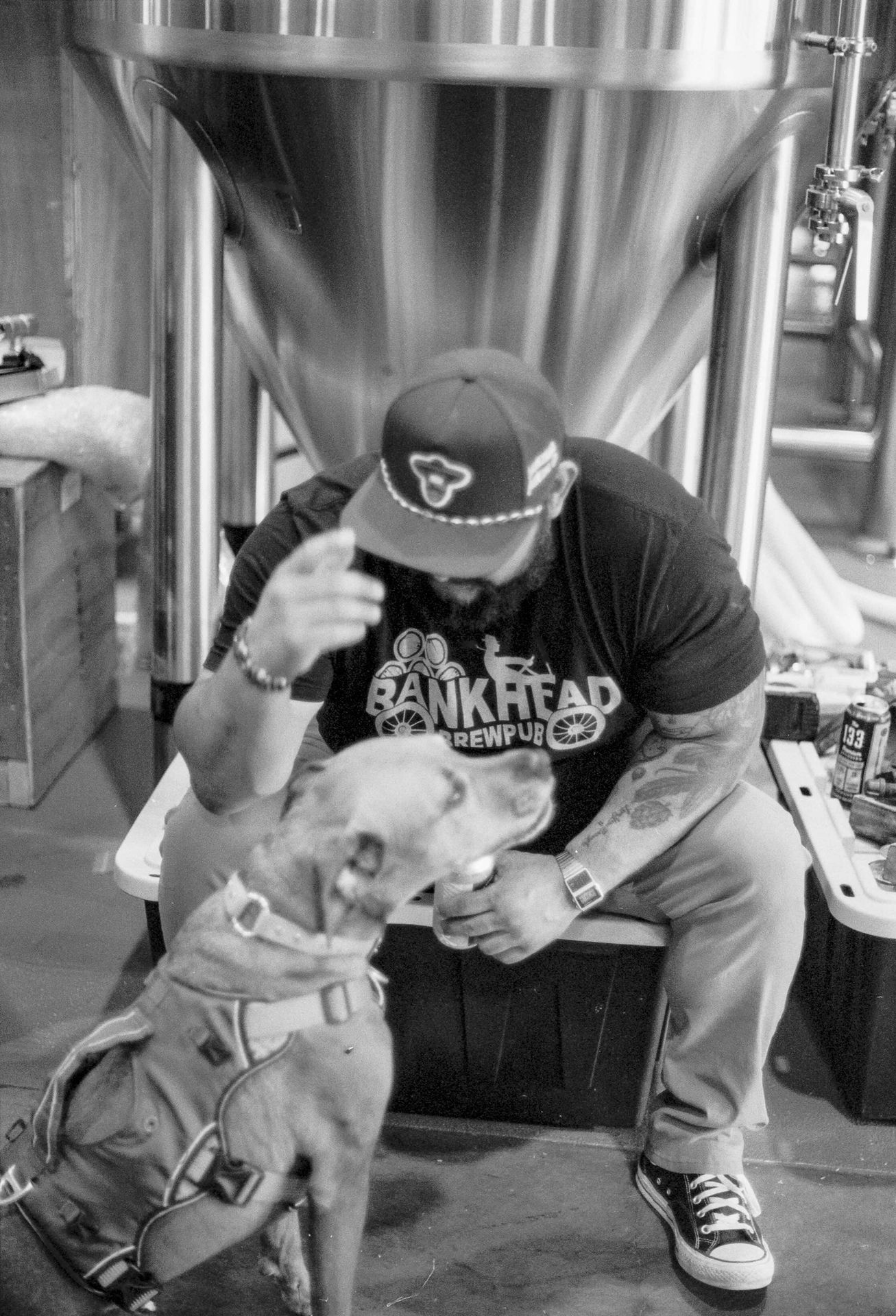
CR (Bankhead Brewpub) and brewing assistant.
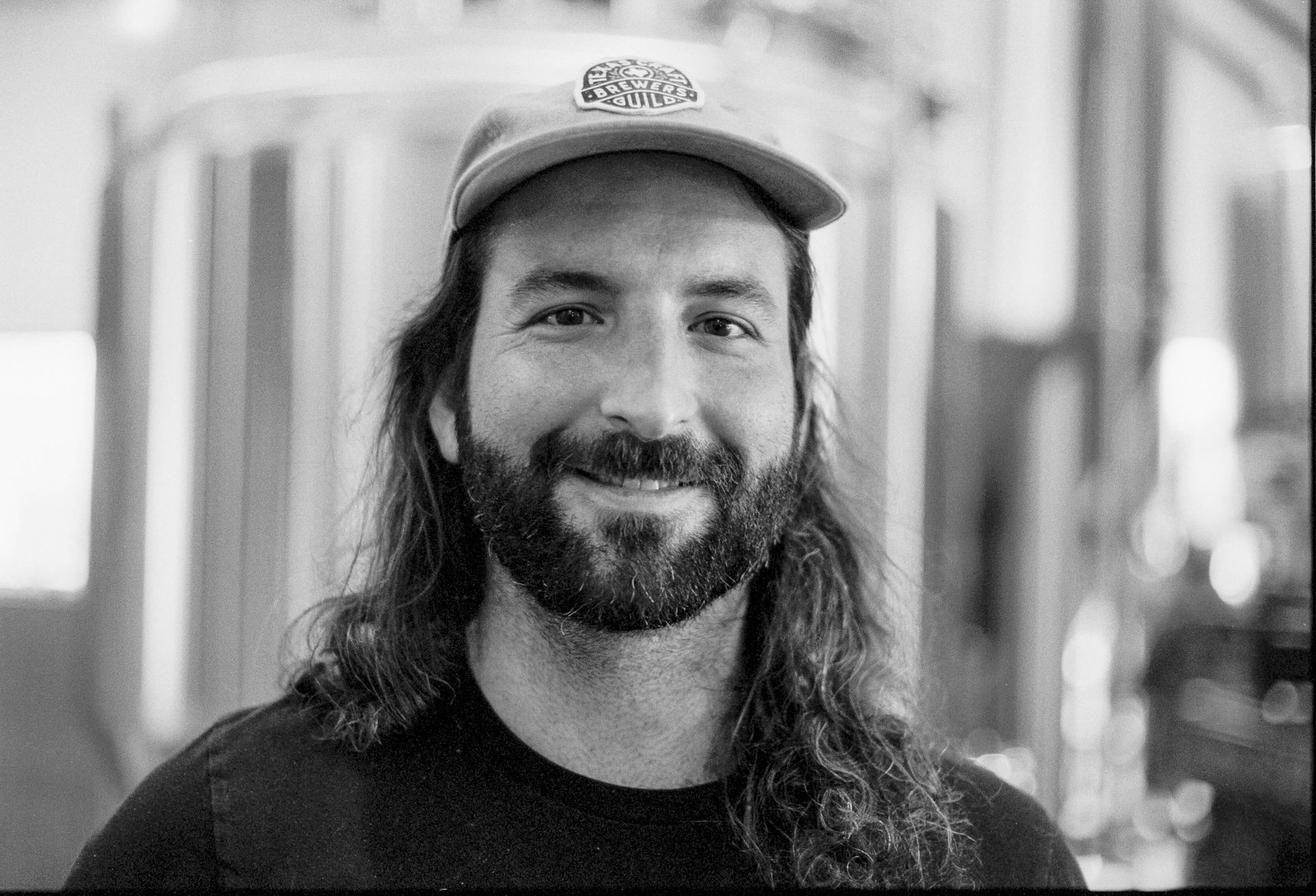
Spencer Withrow (White Rock)
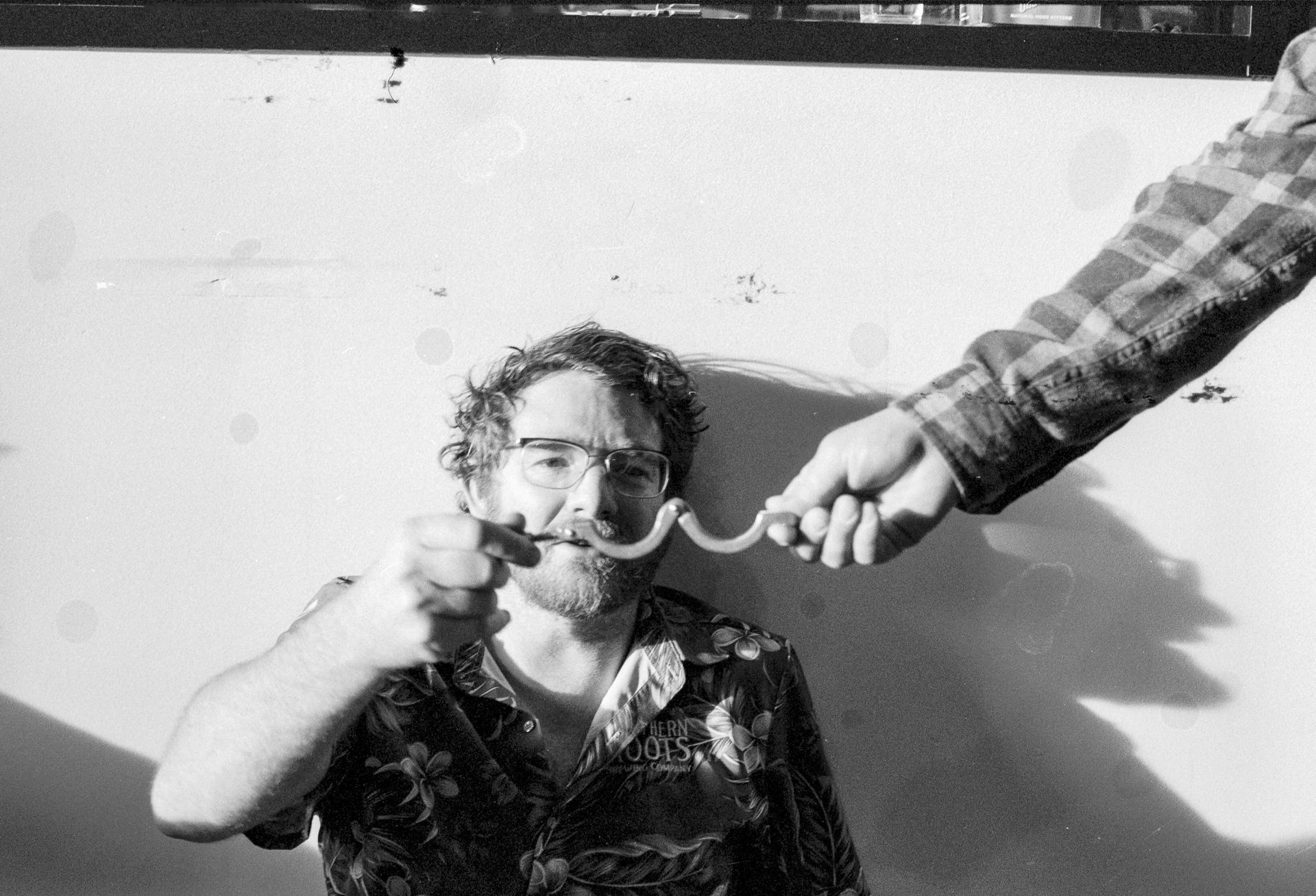
Ryan Hancock (Southern Roots)
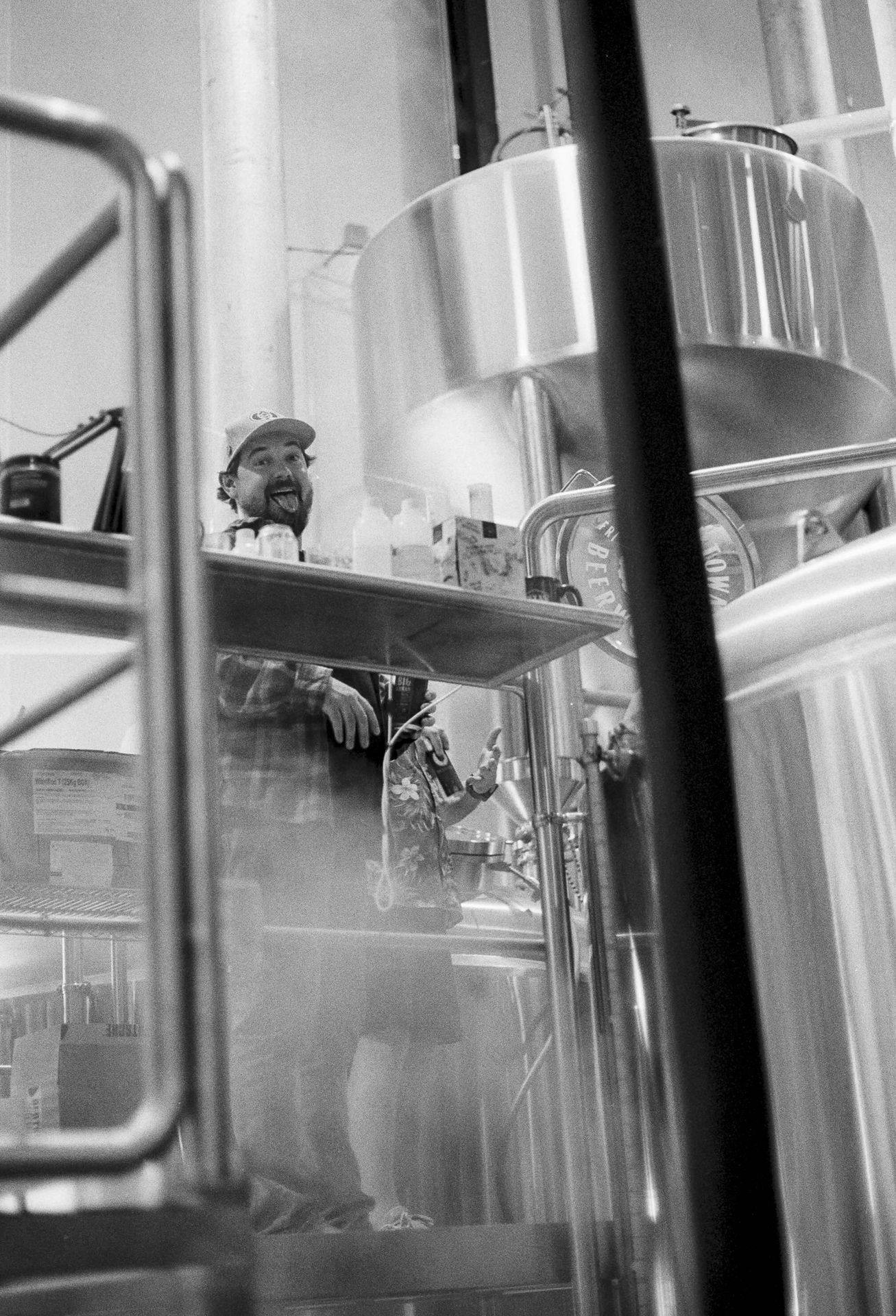
Dylan Moore (Bird Creek)
 Tommy Miller (Rollertown)
 Chad Moshier (Rollertown)
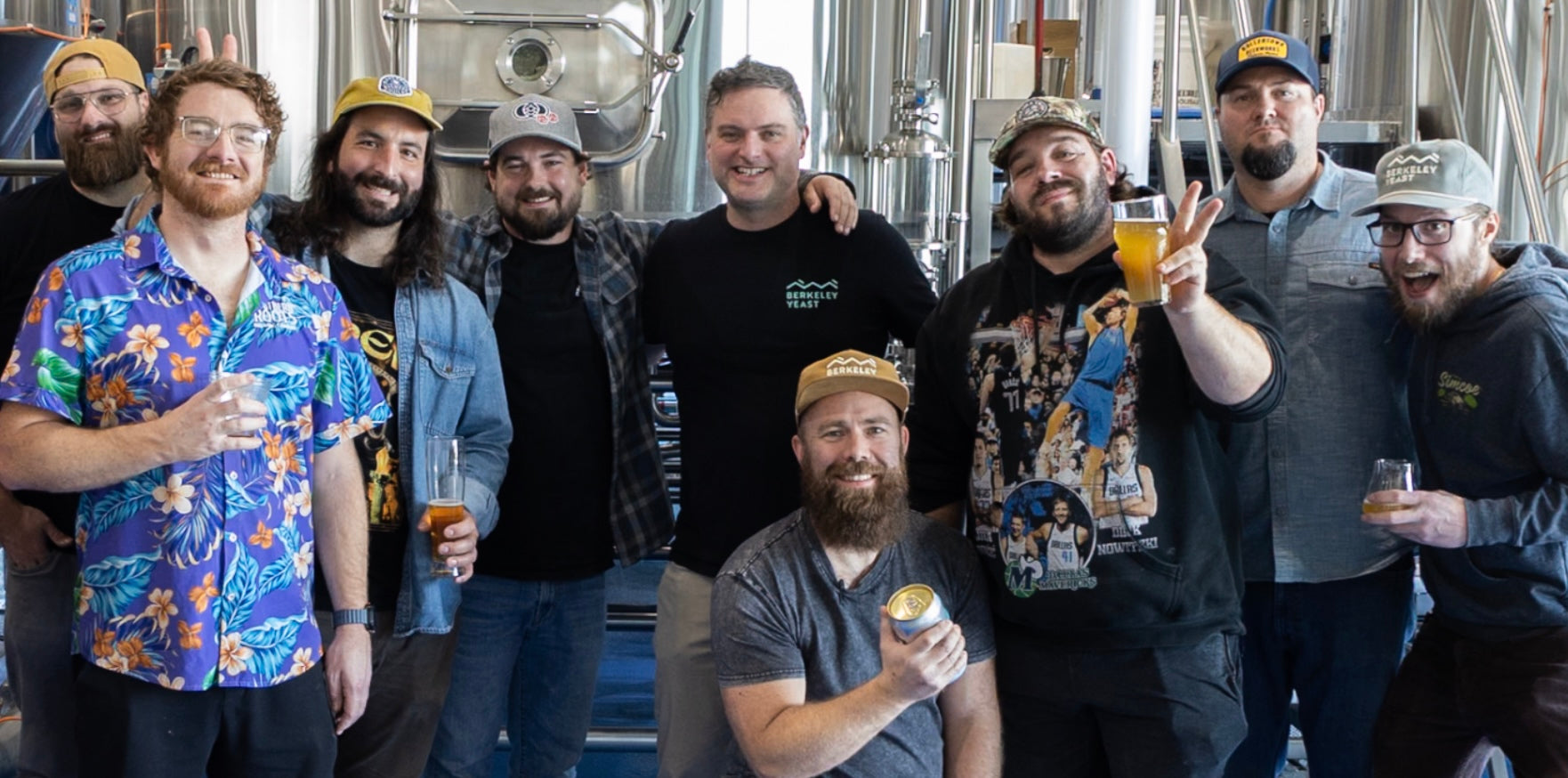
Pictured: Jacob Bates, Ryan Hancock, Spencer Withrow, Dylan Moore, Tim Sciascia, Wolf, Tommy Miller, Chad Moshier, Zack Rosen (Present but not pictured: CR).