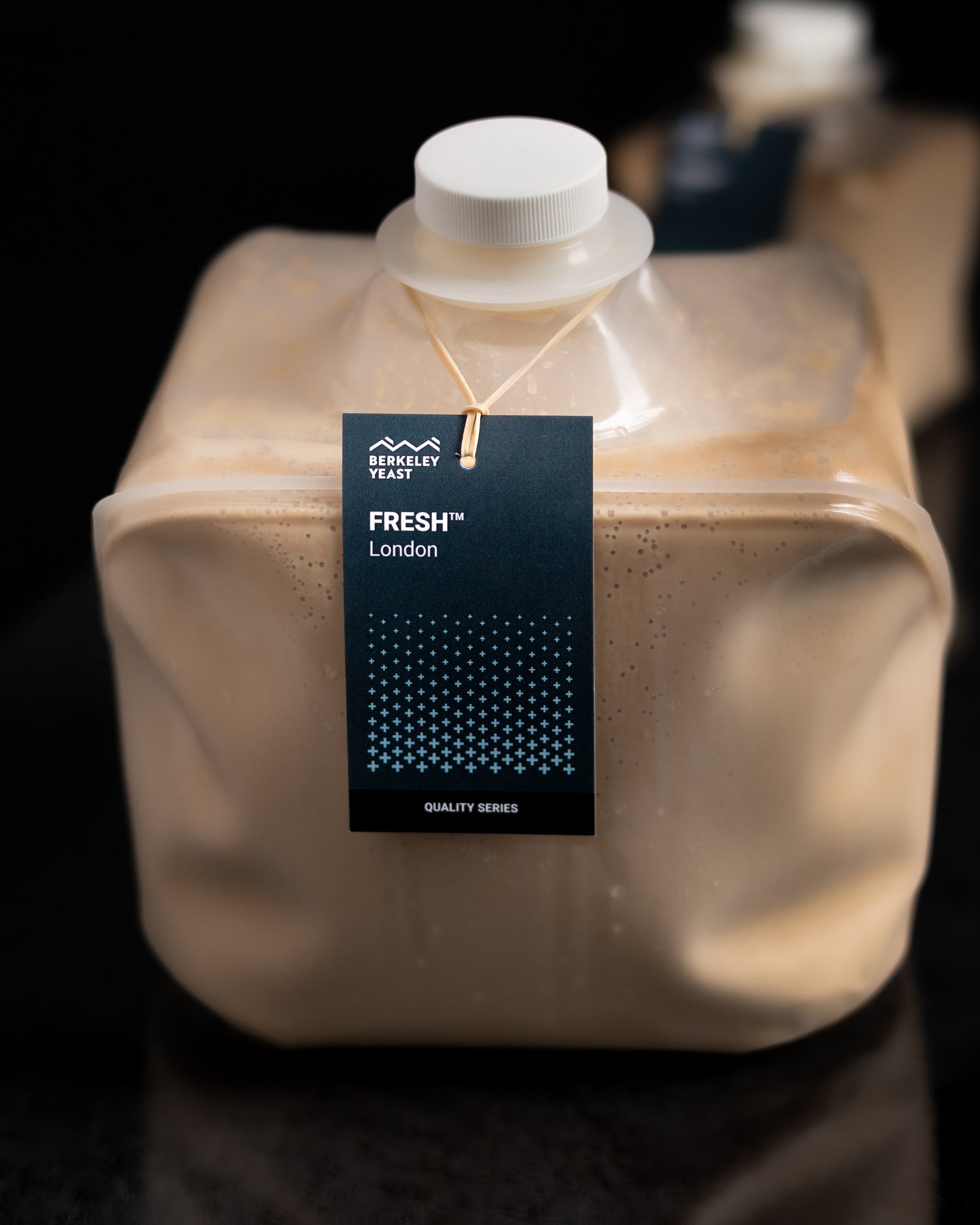
About FRESH™ London
FRESH™ London makes hazy, clean, full-bodied beer, that is free of distracting off-flavors. Let the juice notes pop.
Receiving and Storage
Once you receive the yeast, take the cube containers out of the box and place them in the fridge. If there is any swelling of the containers, simply crack the lid and press on the container to degas, and quickly reseal the container while maintaining positive pressure. We recommend receiving the yeast the day before you brew. Use the yeast as soon as possible. After 1 week, the yeast may lag. After 2 weeks, there could be other negative effects.
General Recommendations
Knockout Temperature: Chill your wort to 65-68°F
Aeration: Target an oxygen level of 1-2 ppm per degree plato
Pitch Rate:
- <18 °P → 750,000 cells/mL/°P
- 18–20 °P → 1,250,000 cells/mL/°P
- ≥21 °P → 1,500,000 cells/mL/°P
Optimal Fermentation Temperature: 66-68°F
Flocculation: Medium to Low
Alcohol Tolerance: 11%
Drauflassen/Multiple Turns: If brewing multiple batches in succession into one tank, aerate each knockout to promote yeast growth.
Soft Crashing and Yeast Harvest: You can expect to reach terminal gravity in 5-7 days. We recommend a soft crash into the low 60°s for 24 hours prior to harvest. Read our Harvesting Best Practices for more tips on maximizing the quantity and quality of the yeast.
Dry Hopping: If dry hopping, set the jackets to the low 70°s to allow the temperature to free-rise naturally to promote attenuation, and ensure a complete fermentation. Allow for two consecutive days at terminal gravity before cold crashing.
Increasing/Decreasing Haze Level: When in the presence of a high quantity of hops, FRESH™ London is a perfect yeast for brewing hazy IPA. On the other hand, if hopping is low, especially dry hopping, beers fermented with FRESH™ London can be clarified, lending the yeast to create classic English styles like ESB and Mild ales.
Haze Changes Over Generations: Due to the top cropping nature of FRESH™ London and other London ale strains, the use of cylindro-conical vessels will encourage the selection of very flocculent yeast from generation to generation. Repeated bottom cropping may result in diminished haze and under-attenuation in later generations. Harvesting yeast from the top of the tank will extend the haze stability. If you must bottom crop, consider blowing CO2 upwards through the racking arm to dislodge any yeast floating at the top. See our Harvesting Best Practices for more information.
Genetic Drift of ALDC: ALDC production does not change over time. The yeast will continue to effectively reduce alpha acetolactate for many generations. FRESH™ strains are genetically stable.